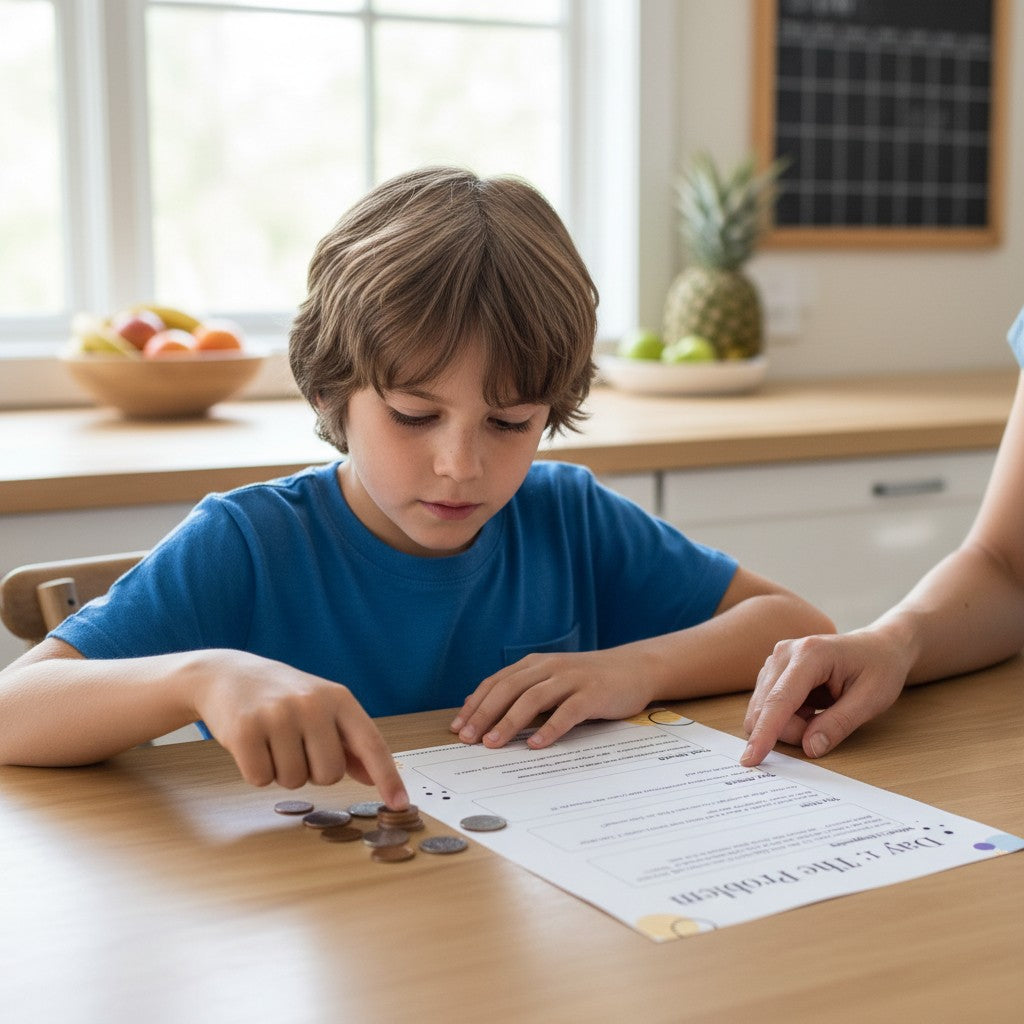
Money Skills Start With Real Decisions

One of the most important money lessons isn't learning how to count money. It's learning how to make decisions with it.

Money isn't just something kids spend. It's something they earn, save, plan, and make decisions with. Every purchase is also choosing not to spend that money somewhere else.

The goal isn't to say "no." It's to help your child recognize the tradeoffs behind every money decision and give them the confidence to make thoughtful choices of their own.

This guide will help you explore six money skills together through simple conversations and everyday moments. Read one section at a time, ask the questions, and look for chances to practice each skill in real life.

  • SAVING

    Money is earned by doing something helpful, useful, or valuable for someone else.

  • SPENDING


    Every time you spend money, you're choosing what it can and can't do next.

  • SAVING

    Saving means setting money aside today for something you want tomorrow.

  • BUDGETING

    A budget is simply a plan for how you'll use the money you have.

  • ENTREPRENUERSHIP

    Entrepreneurs notice problems, create solutions, and find ways to earn money by helping others.

  • PRICING

    Choosing a price means deciding what something is worth to you and to someone else.

Money Skill#1

EARNING

For Kids

Money doesn't appear by magic. People earn money by helping someone, making something, or doing a job that another person thinks is worth paying for.

For Grown-Ups

Help your child notice how people earn money in everyday life. Whether it's the cashier, landscaper, mechanic, or teacher, ask what problem they're solving or how they're helping others.

Talk About It

What's one thing you could do that would help someone enough that they'd want to pay you for it?

Money Skill #2

SPENDING

For Kids

Spending means choosing what your money does. Once you spend it on one thing, you can't use that same money to buy something else.

For Grown-Ups

Instead of deciding for your child, ask questions that help them think through their choices. Good judgment comes from making decisions, not just following directions.

Talk About It

If you bought this today, what would you have to wait to buy later?

Money Skill #3

SAVING

For Kids

Saving means keeping some of your money now so you can buy something you really want later. Waiting isn't always easy, but sometimes it's worth it.

For Grown-Ups

Help your child save for one specific goal instead of saving "just because." Kids are more motivated when they know exactly what they're working toward.

Talk About It

What is something you would be willing to wait and save for?

Money Skill #4

BUDGET

For Kids

A budget is a plan for your money. It helps you decide what you can buy now, what needs to wait, and how to make your money last longer.

For Grown-Ups

Set a spending limit before shopping and stick to it. The budget is part of the lesson, not something to change when it's inconvenient.

Talk About It

If you had $10 to spend today, how would you use it?

Money Skill #5

ENTERPRENEURSHIP

For Kids

Entrepreneurship means finding a way to help other people by creating something they want or need. When you solve a problem for someone else, you create value.

For Grown-Ups

Encourage your child to notice problems before thinking about products. The best business ideas usually begin by helping someone.

Talk About It

What is one problem you notice that you might be able to help solve?

Money Skill #6

PRICING

For Kids

Pricing means deciding how much something should cost. A good price should feel fair to the person selling it and the person buying it.

For Grown-Ups

Ask your child how they came up with their price before sharing your opinion. Let them explain their thinking first.

Talk About It

If you were selling lemonade, how would you decide what one cup should cost?

Getting a Head Start

Your child doesn't have to be a certain age to begin building money skills.

Even small moments help. Let them hand the cashier a dollar, collect the change, or choose between two snacks at the store.

They may not understand budgeting yet, but they're learning that money is exchanged for the things we buy and that every purchase is a choice.

Those little experiences become the foundation for bigger money decisions later.

  • GROCERY STORE

    Let your child bring a few dollars to buy a small item they've chosen. Have them hand the money to the cashier, collect the change, and decide if the purchase was worth it.

  • SHOPPING TRIP

    When your child finds something they really want, let them hold it while they keep shopping. Before heading to the register, ask if it's still worth buying or if they'd rather save that money for something else.

  • COFFEE SHOP

    If your child asks for their usual drink or snack, use it as a chance to talk about tradeoffs.

    How much does it cost? If they bought one every week, how much would that be in a month? Would they rather spend that money on coffee shop treats, or save it for something bigger they've been wanting?

  • GIFT MONEY

    Before heading to the store, count your child's gift money together. Ask what they'd like to spend today, what they'd like to save, and whether anything is worth waiting for.

  • ONLINE SHOPPING

    Before checking out, show your child the total. Invite your child to look through the shopping cart with you. Ask if everything still belongs there or if anything can wait until the next order.

  • BOOK FAIR

    Give your child a spending limit before they start shopping. Let them decide which books to buy, pay for them at checkout, and think about what they'd choose differently next time.

  • Door 2: Better Questions

    Behind The Hideout, kids discover that the answers they get depend on the questions they ask.

    Explore Better Questions 
  • Door 3: Initiative

    Behind Before Anyone Asked, kids discover what happens when they notice a problem and take the first step without waiting to be told.

    Explore Initiative 
  • Explore All Doors

    Every door in The Hollow helps kids practice a different real-world skill. Which one will you explore next?

    Explore All Experience Packs